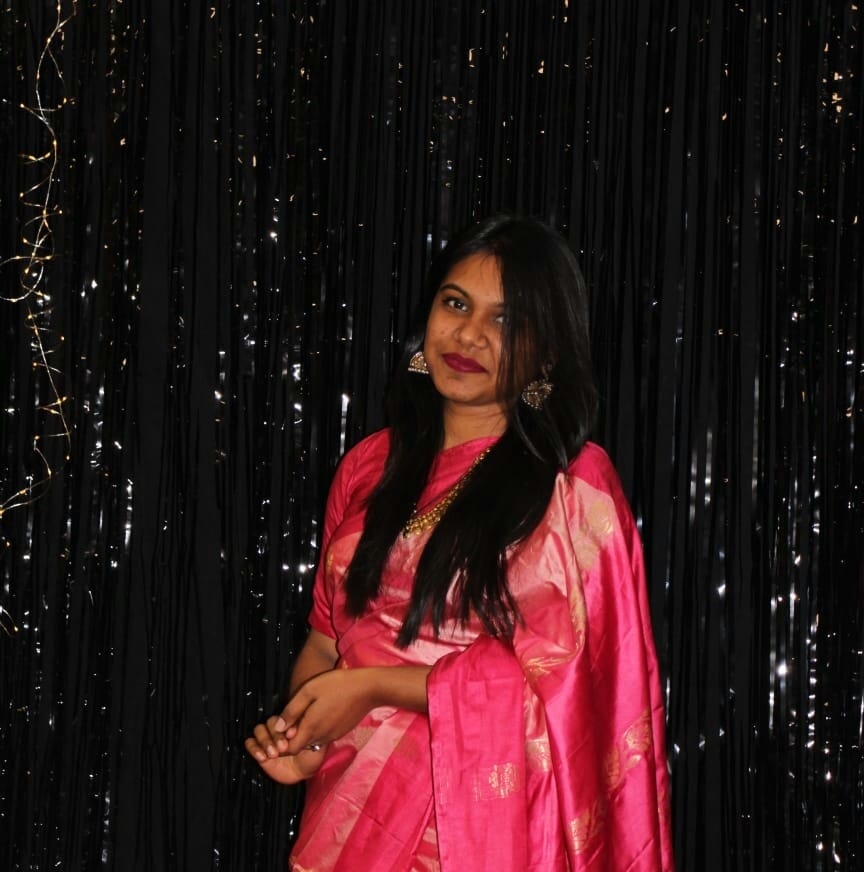
About me
I am a 4th year Ph.D. student in Imaging Science at Rochester Institute of Technology (RIT), working as a Research Assistant at the Biomedical Modeling, Visualization, and Image-Guided Navigation (BiMVisIGN) Lab under the supervision of Dr. Cristian Linte. My research sits at the intersection of medical image analysis, deep learning, and computer vision, with a primary focus on cardiac MRI, specifically the left atrium (LA). My work spans automatic segmentation, deformable image registration, cardiac motion estimation, and vision-language model evaluation for clinically grounded image quality assessment. I am passionate about building robust, data-efficient deep learning pipelines that can directly support clinical decision-making — particularly for patients undergoing ablation therapy for atrial fibrillation (AF).
I am actively seeking internship or co-op opportunities in medical AI, computer vision, or applied machine learning, where I can bring my deep learning expertise to real-world clinical or industry challenges. I am excited to collaborate across research and engineering teams to translate cutting-edge methods into impactful solutions.
Prior to RIT, I earned my M.S. in Electrical Engineering from the University of Minnesota Duluth and my B.S. in Electronics & Communication Engineering from Khulna University of Engineering & Technology, Bangladesh. I have also gained industry experience as a Pre-Sales Engineer and Power & Infrastructure Specialist at multinational telecommunications companies in Bangladesh.
Technical Skills
| Languages | Python, MATLAB, C, R, SQL |
| Frameworks & Libraries | PyTorch, TensorFlow, Keras, NumPy, Pandas, Scikit-learn, OpenCV, SimpleITK, Matplotlib |
| Medical Imaging Tools | 3D Slicer, ITK-Snap, ParaView, MONAI, CUDA |
| Dev & Visualization | Git, VS Code, PyCharm, Spyder, Weights & Biases, Grad-CAM, Tableau |
| OS & Platforms | Linux, Windows, HPC/GPU clusters |
Research
The heart is one of the most complex and dynamic organs to image — and yet, accurate analysis of cardiac MRI is critical for millions of patients living with atrial fibrillation. My doctoral work is driven by a simple but ambitious question: how can we teach machines to see and understand the heart the way a skilled cardiologist does?
I work at the intersection of deep learning, computer vision, and cardiac imaging, building computational tools that help clinicians plan and evaluate ablation therapy, a procedure used to treat atrial fibrillation by deliberately creating small scars in heart tissue to disrupt abnormal electrical signals. Getting this right matters enormously: too little ablation leaves the arrhythmia untreated; too much damages healthy tissue. My research aims to give clinicians better, faster, and more reliable information at every stage of this process.
A central challenge I tackle is the left atrium segmentation problem — precisely delineating the left atrium from LGE-MRI scans, which are notoriously difficult to interpret due to low contrast, imaging artifacts, and high variability across patients. I have explored how large-scale vision foundation models, including self-supervised Vision Transformers like DINOv2, can be adapted to this task without requiring massive amounts of labeled medical data.
A second thread of my research asks: can we infer what a heart is doing from a single static image? Through cardiac motion estimation, I developed a framework that extracts motion patterns of the left atrium across the cardiac cycle, using those patterns as a signal to detect and localize scar tissue — even from images that capture just one frozen moment in time. This work was recognized as an oral presentation at SPIE Medical Imaging 2026
I have also worked on automated image quality assessment for LGE-MRI, recognizing that even the best segmentation model will fail if fed a poor-quality scan. By evaluating vision-language models for this task, I aim to create an early filter in the clinical pipeline that flags problematic acquisitions before they influence downstream analysis. I am currently exploring the integration of vision-language frameworks into the segmentation pipeline, with the goal of leveraging semantic and textual supervision to produce anatomically consistent, clinically interpretable delineations of the left atrium.
News
Our paper “Parameter-Efficient Adaptation of SAM3 for Left Atrium Segmentation from Cardiac MR Images” was accepted in MICCAI Workshop 2026 (July 2026)
Our paper “Toward Vision Language Model-based Assessment of Clinical Quality and Usability of LGE-MR Images for Cardiac Ablation Planning” was accepted in MIUA 2026 (June 2026)
Our paper “A Two Stage Pipeline for Left Atrial Wall Constrained Scar Segmentation and Localization from LGE-MR Images” was accepted in EMBC 2026 (April 2026)
Our paper “Motion-Guided Scar Detection from Static Left Atrial MRI via Deformable Registration to a Healthy Atlas” was accepted in SPIE Medical Imaging 2026 for Oral Presentation (October 2025)
Our paper “Multi-Scale Feature Fusion with Image-Driven Spatial Integration for Left Atrium Segmentation from Cardiac MR Images” was accepted in EMBC 2025 (April 2025)
Our paper “Investigating the Domain Adaptability of General-Purpose Foundation Models for Left Atrium Segmentation from MR Images” was accepted in Functional Imaging and Modeling of the Heart (FIMH) 2025 (April 2025)
Attended SPIE Medical Imaging, 2025 to present our paper on “Assessing the Performance of the DINOv2 Self-supervised Learning Vision Transformer Model for the Segmentation of the Left Atrium from MRI Images”.
Received Travel Award from RIT Women in science (WISe) program (December 2024)
Our paper, “Assessing the Performance of the DINOv2 Self-supervised Learning Vision Transformer Model for the Segmentation of the Left Atrium from MRI Images” was accepted in SPIE Medical Imaging 2025 for Oral Presentation (October 2024)
Our paper, “Comparative analysis of non-rigid registration techniques for liver surface registration,” was accepted in SPIE Medical Imaging, 2024 (October 2023)
Passed Qualifying Exam (July 2023)
Started Ph.D. in Imaging Science, Rochester Institute of Technology (August 2022)
Started Ph.D. in Electrical Engineering, Texas Tech University (August 2021)
Started MS in Electrical Engineering, University of Minnesota Duluth (August 2018)
Joined Banglalink Digital Communications Ltd. as Power & Infrastructure Specialist (January 2018)
Joined Express Systems Ltd. as Pre-sales Engineer (January 2016)
Graduated (BSc in ECE) from Khulna University of Engineering & Technology (July 2015)